
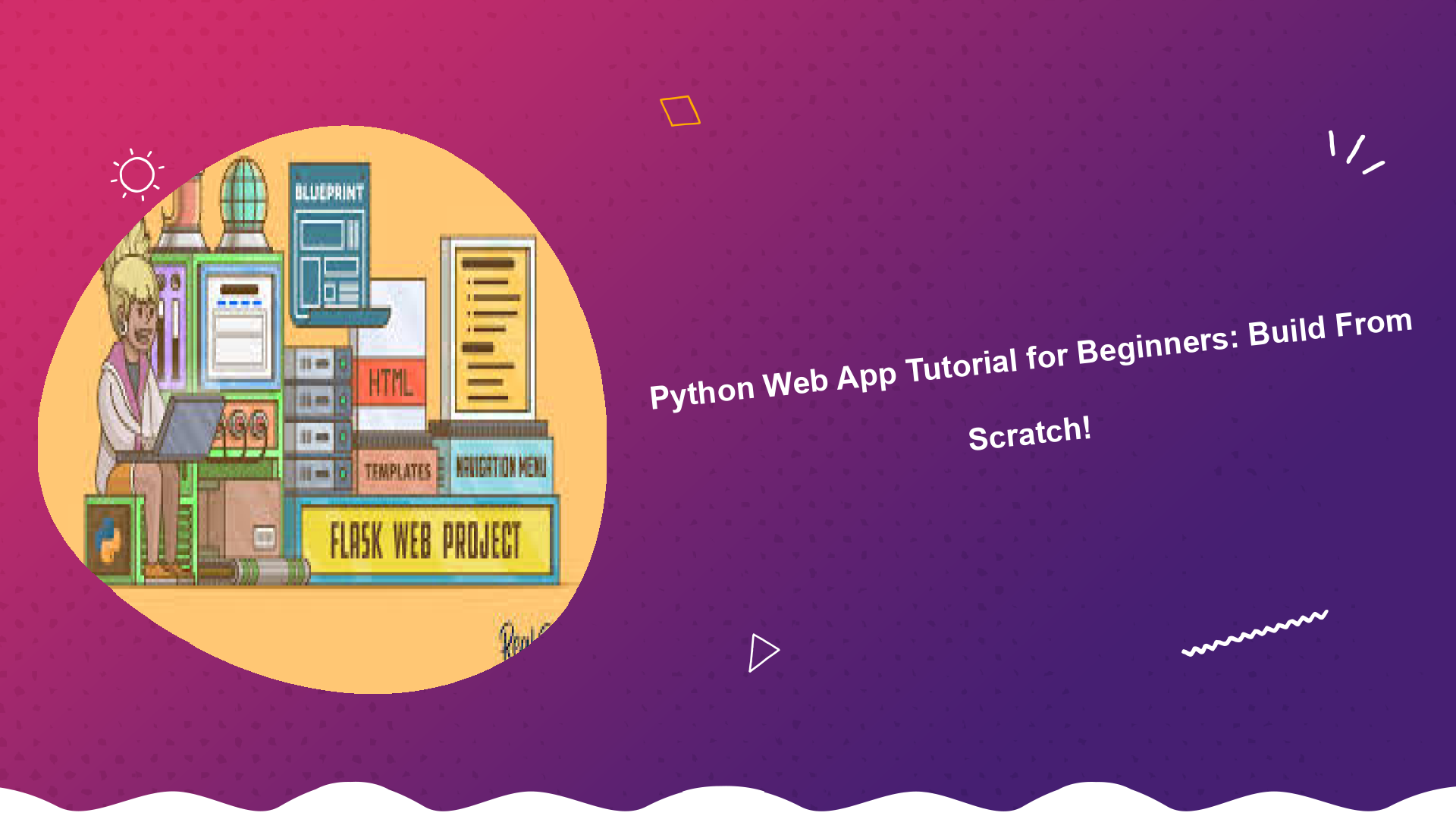
Python Web App Tutorial for Beginners: Build From Scratch!
Welcome to the ultimate guide for creating your first Python web application! This python web application tutorial beginner is designed for individuals with little to no prior programming experience. We’ll break down the process into simple, manageable steps, empowering you to build web app python from the ground up. Forget complex setups and overwhelming jargon; we’ll focus on clarity and practical application.
Why Choose Python for Web Development?
Python has become a dominant force in web development, and for good reason. Its readable syntax, extensive libraries, and supportive community make it an ideal choice for beginners. Here’s why you should consider Python for your web projects:
- Easy to Learn: Python’s clear and concise syntax resembles plain English, making it easier to grasp than many other programming languages.
- Large Community Support: Python boasts a vibrant and active community. This means you’ll find ample resources, tutorials, and support forums to assist you along your journey.
- Versatile: Beyond web development, Python excels in data science, machine learning, and scripting, making it a valuable skill for various domains.
- Powerful Frameworks: Python offers robust web frameworks like Flask and Django, simplifying the development process and providing structure to your projects.
Choosing the Right Python Web Framework
A web framework provides a structure for building web applications, streamlining common tasks and promoting code organization. For beginners, Flask is often recommended due to its simplicity and flexibility. Django, on the other hand, is a more full-featured framework suitable for larger, more complex projects. Let’s dive into both:
Flask: A Microframework for Simplicity
Flask is a lightweight and flexible flask python tutorial framework that provides the essentials for building web applications without imposing strict structures. It’s perfect for small to medium-sized projects where you want more control over the architecture.
from flask import Flask
app = Flask(__name__)

@app.route('/')
def hello_world():
    return 'Hello, World!'

if __name__ == '__main__':
    app.run(debug=True)
This simple code snippet demonstrates a basic Flask application that displays “Hello, World!” in the browser. The @app.route('/') decorator defines the route for the homepage (‘/’), and the hello_world() function returns the content to be displayed.
Django: A Full-Featured Framework for Scalability
Django is a high-level Python web framework that encourages rapid development and clean, pragmatic design. It follows the Model-View-Template (MVT) architectural pattern and provides a wealth of built-in features, including an ORM (Object-Relational Mapper), authentication, and a template engine. Check out a django python tutorial online to see the comprehensive nature of this framework.
# Example Django Model (models.py)
from django.db import models

class Task(models.Model):
    title = models.CharField(max_length=200)
    completed = models.BooleanField(default=False)

    def __str__(self):
        return self.title
This example demonstrates a simple Django model for a “Task” object. Django’s ORM allows you to interact with your database using Python code, abstracting away the complexities of SQL. For advanced projects looking at web development involving databases, Django is often the preferred choice. For modernization projects, consider alternatives to legacy systems; for example, compare the php framework for legacy application modernization.
Setting Up Your Development Environment
Before you can start building your web application, you need to set up your development environment. This involves installing Python and a package manager like pip.
- Install Python: Download the latest version of Python from the official website ( https://www.python.org/downloads/ ). Make sure to add Python to your system’s PATH during installation.
- Install pip: Pip is usually included with Python installations. You can verify its installation by running
pip --versionin your terminal. If it’s not installed, you can download and install it from https://pip.pypa.io/en/stable/installing/. - Create a Virtual Environment (Recommended): Virtual environments isolate your project’s dependencies, preventing conflicts between different projects. You can create a virtual environment using the
venvmodule:
python3 -m venv myenv
source myenv/bin/activate  # On Linux/macOS
myenvScriptsactivate  # On Windows
Building a Simple Flask Web Application: Step-by-Step
Let’s create a basic Flask web application that displays a simple form and handles user input. This python tutorial for building a web application from scratch will give you hands-on experience with the framework.
Step 1: Create the Project Directory
Create a new directory for your project. You can name it whatever you like, for example, “mywebapp”.
Step 2: Install Flask
Activate your virtual environment (if you created one) and install Flask using pip:
pip install flask
Step 3: Create the Main Application File (app.py)
Create a file named app.py in your project directory and add the following code:
from flask import Flask, render_template, request

app = Flask(__name__)

@app.route('/', methods=['GET', 'POST'])
def index():
    message = None
    if request.method == 'POST':
        name = request.form['name']
        message = f'Hello, {name}!'
    return render_template('index.html', message=message)

if __name__ == '__main__':
    app.run(debug=True)
This code defines a Flask application with a single route (‘/’) that handles both GET and POST requests. If a POST request is received (i.e., the form is submitted), it retrieves the ‘name’ from the form data and displays a greeting message. If you are using PHP, consider researching solutions for common errors by referring to a php debugging tutorial for beginners.
Step 4: Create the HTML Template (templates/index.html)
Create a directory named templates in your project directory and create a file named index.html inside it. Add the following HTML code:
My Web App
Welcome!
{% if message %}
{{ message }}
{% endif %}
This HTML code defines a simple form with a text input field for the user’s name and a submit button. It also displays a message (if one is provided) using Flask’s templating engine.
Step 5: Run the Application
Open your terminal, navigate to your project directory, and run the application:
python app.py
Open your web browser and navigate to http://127.0.0.1:5000/. You should see the form. Enter your name and click the “Submit” button to see the greeting message. Understanding the broader web development ecosystem can also be helpful as you build your application. This will provide a background for what tools and frameworks other developers are using.
Understanding Key Concepts
Let’s explore some fundamental concepts that are crucial for web application development.
HTTP Methods (GET and POST)
HTTP methods define the type of action a client (e.g., a web browser) wants to perform on a server. GET requests are used to retrieve data from the server, while POST requests are used to send data to the server (e.g., submitting a form). As you advance, you may want to compare best PHP framework REST API authentication with best practices for Python-based REST APIs.
Templates and Templating Engines
Templates are HTML files with placeholders for dynamic content. Templating engines (like Jinja2 in Flask) allow you to insert data into these templates, generating dynamic HTML pages. This separates the presentation layer from the application logic.
Request and Response Cycle
The request and response cycle is the fundamental communication pattern in web applications. The client sends a request to the server, the server processes the request, and then sends a response back to the client.
Advanced Topics and Next Steps
Once you have a grasp of the basics, you can explore more advanced topics such as:
- Databases: Integrate your web application with a database (e.g., MySQL, PostgreSQL) to store and retrieve data.
- Authentication: Implement user authentication and authorization to secure your application.
- REST APIs: Build REST APIs to allow other applications to interact with your web application.
- Deployment: Deploy your web application to a production server (e.g., Heroku, AWS).
If you are interested in data analysis, consider learning python for data analysis for beginners as this can improve your web application’s ability to understand and serve the users’ needs.
Conclusion: Your Journey Begins Now
This easy python web application tutorial for beginners has equipped you with the foundational knowledge to start building your own web applications with Python. Remember to practice, experiment, and explore the vast resources available online. Happy coding! If you need to start from ground zero with coding, you can find a beginner tutorial for nearly any popular language today! Don’t forget, this is just the beginning of your journey into python web app development.
For more advanced topics and specific guides, consider checking out the official Flask and Django documentation. You can also explore online courses and tutorials on platforms like Udemy and Coursera.
As a resource to the wider development ecosystem, a full list of resources on learning languages such as php tutorial for beginners is also available to help in all aspects of web creation.